
θ-TaN: a metallic material for advanced thermal management
Working with collaborators, we realized single-crystalline θ-phase tantalum nitride, a metallic material that combines electrical conduction with exceptionally high thermal conductivity.
Why better metallic thermal conductors matter
Thermal conductivity describes how efficiently a material carries heat. In electronic devices, removing localized hot spots is essential to maintaining performance, reliability, and energy efficiency. Copper is widely used for heat spreading and heat sinks, with a room-temperature thermal conductivity of approximately 400 W/(m·K). Increasing power density in AI hardware, power electronics, and advanced packaging creates a growing need for materials that can move heat more efficiently.
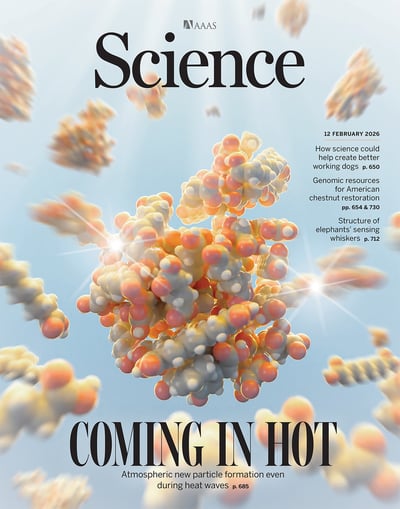
Our group and collaborators realized single-crystalline metallic θ-phase tantalum nitride with a room-temperature thermal conductivity of approximately 1100 W/(m·K), nearly three times that of copper [Science 391, 707 (2026) · Download PDF]. This result establishes a new benchmark for metallic heat conduction and expands the possibilities for designing next-generation thermal materials.
Key findings
- Reported room-temperature thermal conductivity: approximately 1100 W/(m·K), nearly three times that of copper.
- Synchrotron measurements and ultrafast optical spectroscopy investigate the mechanisms behind this high conductivity.
Unconventional heat transport in a metallic material
For more than a century, silver and copper have served as benchmarks for high thermal conductivity in metals. Our demonstration of approximately 1100 W/(m·K) in metallic θ-TaN substantially exceeds these familiar room-temperature benchmarks, expanding the possibilities for heat transport in metallic materials [Science 391, 707 (2026) · Download PDF].
In conventional metals, electrons carry most of the heat. θ-TaN combines a metallic electronic structure with predominantly phonon-mediated heat conduction. Its distinctive lattice dynamics suppress phonon–phonon scattering, while weak electron–phonon coupling further supports exceptionally efficient heat transport.
Our group and collaborators synthesized high-quality θ-TaN single crystals using a flux-assisted metathesis reaction. Structural characterization, ultrafast optical measurements, synchrotron spectroscopy, and first-principles calculations connected the measured ultrahigh thermal conductivity with its microscopic transport mechanisms [Science 391, 707 (2026) · Download PDF].
Relevance to electronics and thermal management
The combination of electrical conduction and ultrahigh thermal conductivity makes θ-TaN a promising candidate for future thermal management in AI hardware, power electronics, and electronic packaging. Translating its intrinsic properties into effective device cooling requires further development of synthesis, processing, interfaces, and integration strategies.
Publication and authors
Metallic θ-phase tantalum nitride has a thermal conductivity triple that of copper
S. Li, C. Su, Z. Qin, A. Alatas, M. Kunz, T. Yamada, S. D. Kelly, M. H. Upton, A. Gironda, J. Zhao, B. Kalkan, W. Yang, T. Aoki, Yongjie Hu
[Science 391, 707 (2026) · Download PDF]
DOI: 10.1126/science.aeb1142 · Download PDF
Explore the laboratory’s publication list
Related research
- Boron arsenide for semiconductor thermal management
- Thermal Transistor
- Room-temperature phonon focusing in boron arsenide
- Thermal interface materials for electronics and packaging
- Transport physics: phonons, anharmonicity, and heat transfer
Connecting semiconductor and metallic heat transport
Our θ-TaN research extends a sustained effort to understand heat conduction across material classes. Explore our boron arsenide research and the broader Advanced Thermal Materials and Semiconductor Cooling Technology direction.
Selected media coverage
- Super Heat Conductor Challenges Fundamental Physics — Scientific American, April 2026
- Metallic Material Breaks 100-year Thermal Conductivity Record — Physics World, February 2026