
Hu Research Laboratory at UCLA

Welcome to the H-Lab at UCLA!

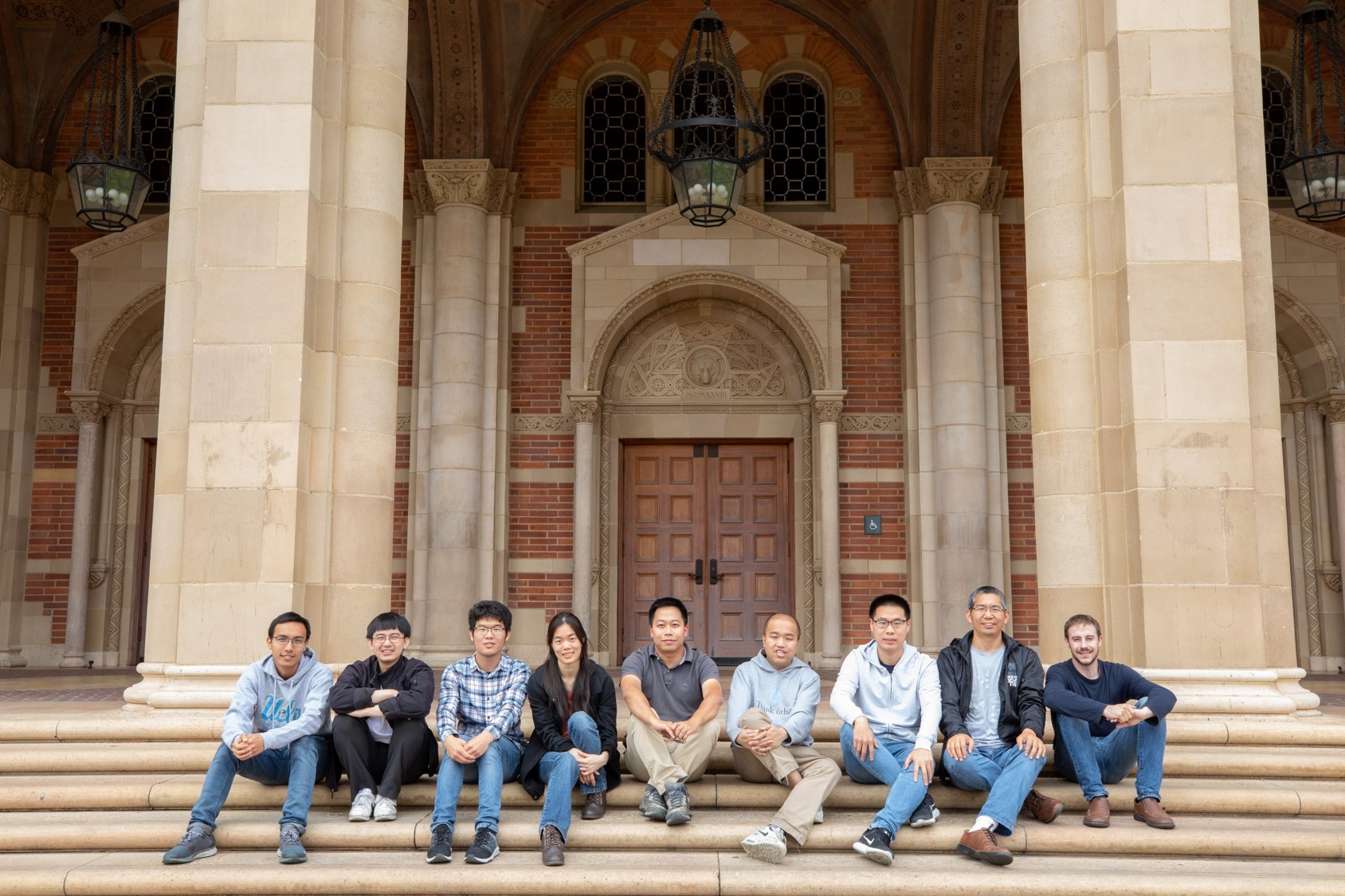
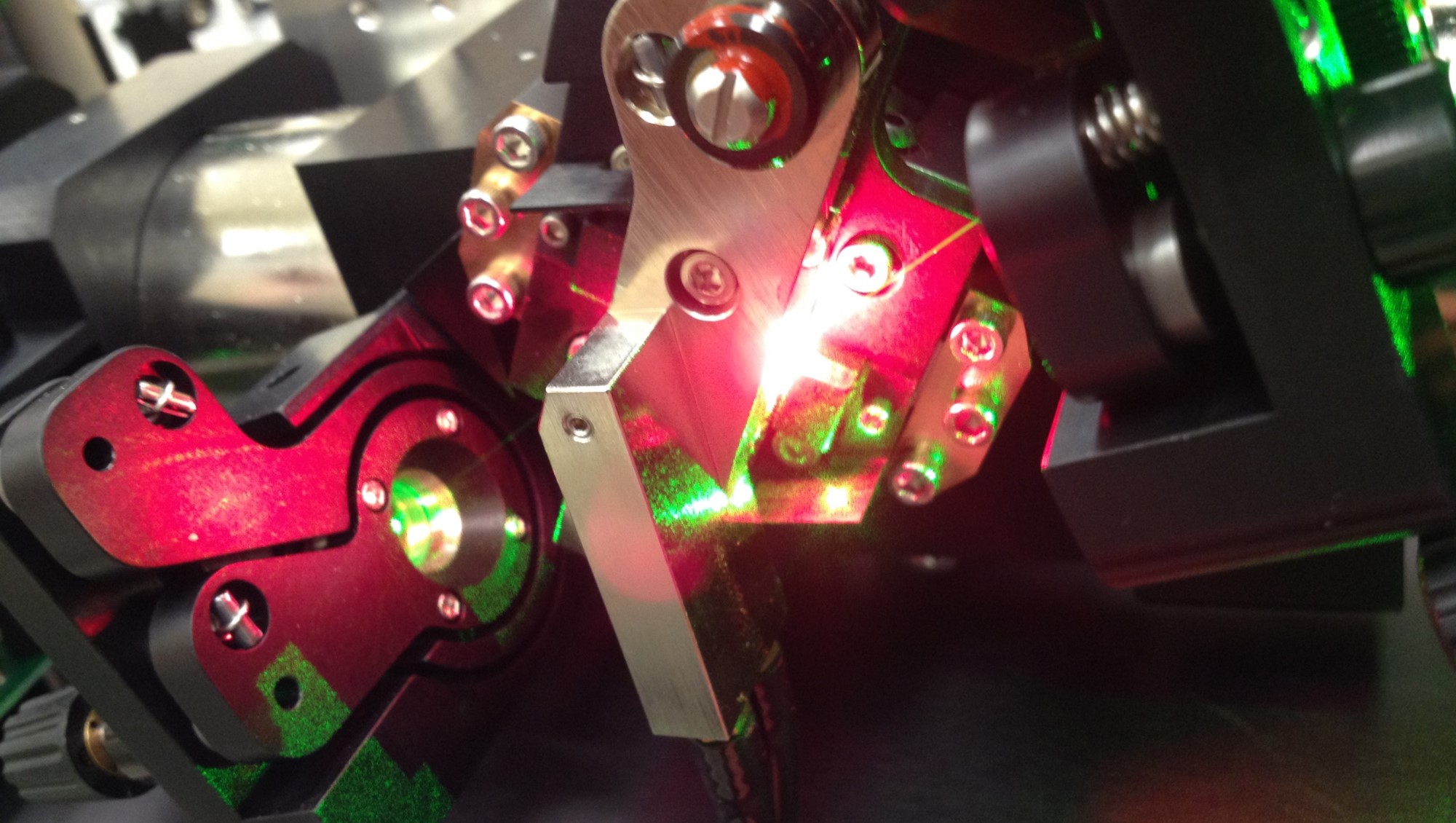
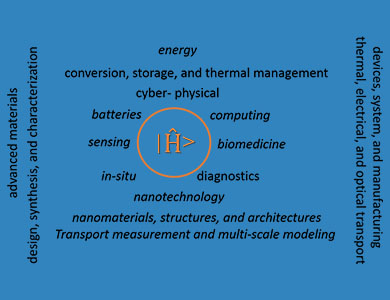
The H-Lab is a research group at UCLA led by Professor Yongjie Hu. Motivated by technological challenges, we investigate fundamental heat transfer and charge transport and develop advanced materials, including semiconductors, as well as interfaces and devices. Our research advances thermal management for AI hardware, power electronics, sensors, and energy technologies, connecting nanoscale transport physics and materials chemistry with efficient heat dissipation and device performance. We combine materials design and chemical synthesis, ultrafast optical spectroscopy, electrical measurements, thermal spectral mapping, first-principles theory, and AI-assisted modeling. Explore our website to learn more about our research, team, and facilities.

Record-setting thermal conductors. Our research has established benchmarks for heat conduction in semiconductor and metallic materials, demonstrating room-temperature thermal conductivities of approximately 1300 W/(m·K) in boron arsenide and 1100 W/(m·K) in θ-phase tantalum nitride. Explore our research


News

Prof. Yongjie Hu has been named a Fellow of the American Physical Society (APS). October 9, 2026

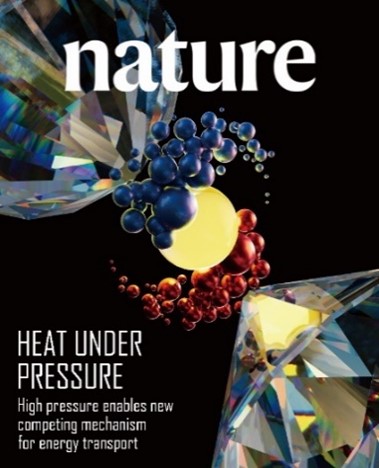
Our new study demonstrates phonon focusing at room temperature. The work was published in [Nature Physics 22, 1416 (2026) · Download PDF] and featured on the cover of its September issue. Congratulations to all authors! See UCLA News here. September 15, 2026

Congratulations to our recent graduate, Ying Cui, on starting as an Assistant Professor at the University of Rhode Island. Best of luck! July 15, 2026

We are pleased that our research has been highlighted by Physics World: Metallic material breaks 100-year thermal conductivity record. February 19, 2026

Our recent work was highlighted by UCLA Samueli, UCLA Newsroom, and CNSI: Discovering Metallic Material with Record Thermal Conductivity. January 16, 2026

Our new study reporting a record-setting metallic material with exceptionally high thermal conductivity has now been published in [Science 391, 707 (2026) · Download PDF]. This work follows our report of boron arsenide [Science 361, 575 (2018) · Download PDF] as an ultrahigh-thermal-conductivity semiconductor and extends our long-standing effort to understand and push the fundamental limits of heat transport in solids. Congratulations to our outstanding students and dedicated collaborators! We are excited to see where this leads for next-generation electronics cooling, AI hardware, and energy technologies. January 15, 2026

Congratulations to our recent graduate, Huan Wu, on starting as an Assistant Professor at Arizona State University! Wishing you all the best in this exciting new chapter. July 1, 2025

View all news →

Research Highlights

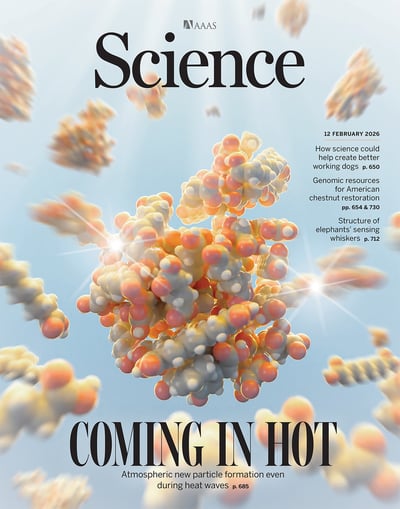
Room-temperature quantum heat waves from phonon focusing Room-temperature quantum heat waves from phonon focusing

In cubic boron arsenide, room-temperature phonon focusing produces highly concentrated, symmetry-guided rays that do not spread diffusively. The resulting temperature patterns reveal a wave-like regime of phonon transport beyond conventional Fourier heat conduction. This highlights the quantum nature of heat at room temperature and opens pathways toward quantum thermal engineering and next-generation electronic technologies. September 15, 2026

Read the research overview →

Metallic theta-phase tantalum nitride has a thermal conductivity triple that of copperMetallic theta-phase tantalum nitride has a thermal conductivity triple that of copper

Efficient heat dissipation is fundamentally limited by intrinsic scattering mechanisms that cap the thermal conductivity of metallic materials such as copper to ~400 watts per meter-kelvin. Here we report the experimental realization of single-crystalline theta-phase tantalum nitride, a metastable transition metal nitride predicted to overcome this limitation. We measured a room-temperature thermal conductivity of ~1100 watts per meter-kelvin, nearly three times that of copper. Synchrotron-based inelastic x-ray scattering revealed a distinctive phonon band structure with a large acoustic-optical gap and phonon bunching, which suppress phonon-phonon scattering. Ultrafast optical spectroscopy confirmed exceptionally weak electron-phonon coupling and validated first-principles calculations. These findings redefine the thermal transport limits of metallic materials and open new opportunities for advancing thermal management in electronics and power systems. January 15, 2026

Read the research overview →

Electrically Gated Thermal SwitchElectrically Gated Thermal Switch

Controlling heat flow is a key challenge for electronics, sustainable energy, industrial processing, and thermal therapy. We demonstrate a first-of-its-kind electronically gated three-terminal device that allows continuous and reversible regulation of heat flow by an electric field through carefully controlled chemical bonding and charge distributions within the molecular interface. The devices have ultrahigh switching speeds above 1 megahertz, have on/off ratios in thermal conductance greater than 1300%, and can be switched more than 1 million times. We anticipate that these advances will generate opportunities in molecular engineering for thermal management systems and thermal circuit design. November 3, 2023

Read the research overview →

Thermal Energy Transport Under Extreme ConditionsThermal Energy Transport Under Extreme Conditions

We observed a new physics principle governing thermal energy transport under extreme conditions. We performed in situ ultrafast optics, Raman spectroscopy, and inelastic X-ray scattering measurements to examine the phonon band structure evolution and confirmed the anomalous high-pressure behavior arising from competing heat-conduction channels governed by higher-order anharmonic interactions. Our spectroscopy study, combined with atomistic theory, provides a powerful approach to probe complex phonon physics and gain fundamental insights into microscopic energy transport in materials with extreme properties. December 8, 2022

Explore transport physics →

Integration of Boron Arsenide Cooling Substrates Into Gallium Nitride Devices for High-Power ElectronicsIntegration of Boron Arsenide Cooling Substrates Into Gallium Nitride Devices for High-Power Electronics

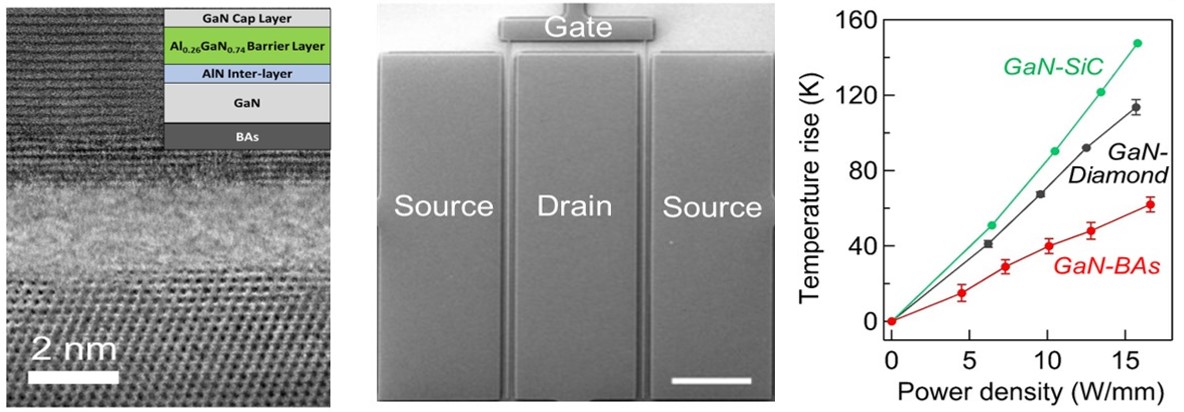
Our study demonstrates heterogeneous integration of BAs and BP cooling substrates with wide-bandgap gallium nitride high-electron-mobility transistor devices. GaN-on-BAs structures exhibit a high thermal boundary conductance of 250 MW/(m²·K), and comparison of device-level hot-spot temperatures with length-dependent scaling (from 100 µm to 100 nm) shows that the power cooling performance of BAs exceeds that of reported diamond devices. Furthermore, operating AlGaN/GaN high-electron-mobility transistors with BAs cooling substrates exhibit substantially lower hot-spot temperatures than diamond and silicon carbide at the same transistor power density, illustrating their potential for use in the thermal management of radio-frequency electronics. June 17, 2021

Read the device-cooling research overview →

Self-Assembled Manufacturing for Thermal Management of Wearable Electronics and RoboticsSelf-Assembled Manufacturing for Thermal Management of Wearable Electronics and Robotics

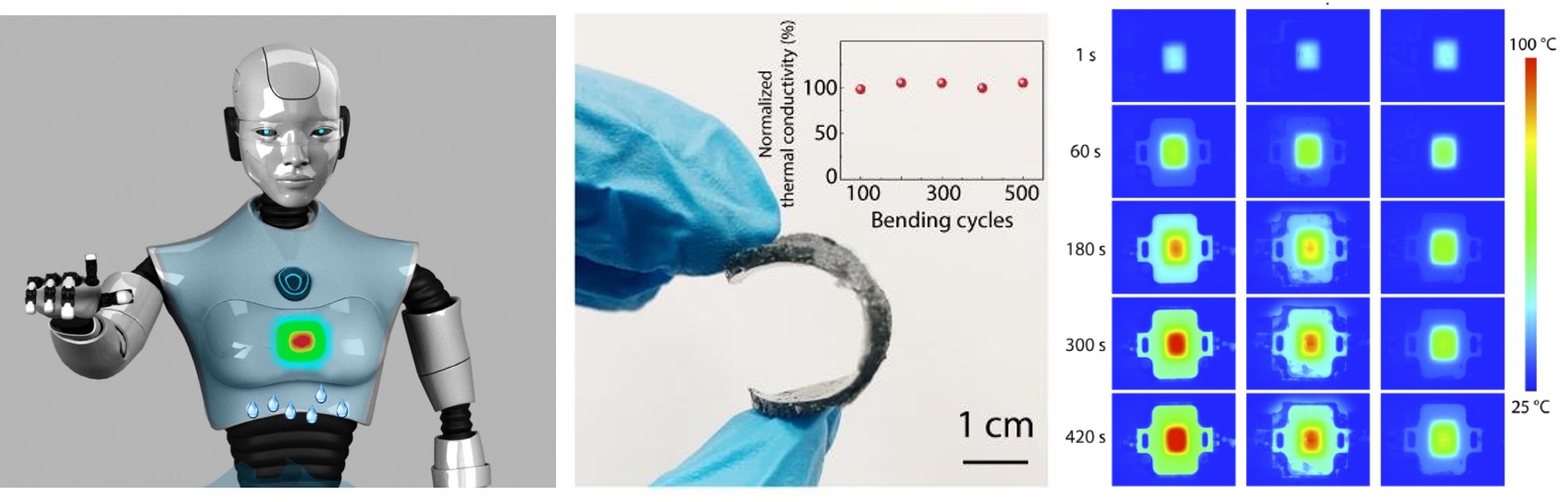
As an emerging field, thermal management for wearable electronics and robots requires advanced building blocks to provide not only efficient heat dissipation but also high softness and flexibility. Using new materials, modeling-guided design, and self-assembled manufacturing, we report high-performance thermal management with excellent elastic compliance similar to that of soft biological tissues down to 100 kPa, high flexibility, and thermal conductivity approximately 100 times that of a typical polymer, maintained over at least 500 bending cycles. The superior cooling performance has been verified by device integration with power LEDs to show a 45 °C reduction in the hotspot temperature. Together, this study demonstrates scalable manufacturing of a new generation of energy-efficient and flexible thermal materials that holds great promise for advanced thermal energy technologies. March 12, 2021

Explore thermal interface materials →

Ultrahigh Thermal Conductivity Identified in Ternary CompoundsUltrahigh Thermal Conductivity Identified in Ternary Compounds

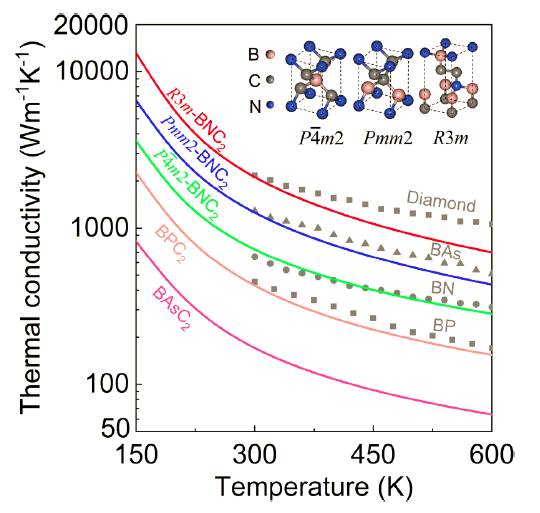
Building on our previous efforts, this work investigates the fundamental lattice vibrational spectra and thermal conductivity of ternary compounds including four-phonon processes. We find an ultrahigh room-temperature thermal conductivity of up to 2100 W/(m·K), enabled by strong carbon–carbon bonding and exceeding that of most common materials and boron arsenide. This study provides fundamental insight into the atomistic design of thermal conductivity and opens up opportunities for discovering new materials with complex compound structures. March 12, 2021

Intrinsic low thermal conductivity and phonon renormalization due to strong anharmonicity of single-crystal tin selenideIntrinsic low thermal conductivity and phonon renormalization due to strong anharmonicity of single-crystal tin selenide

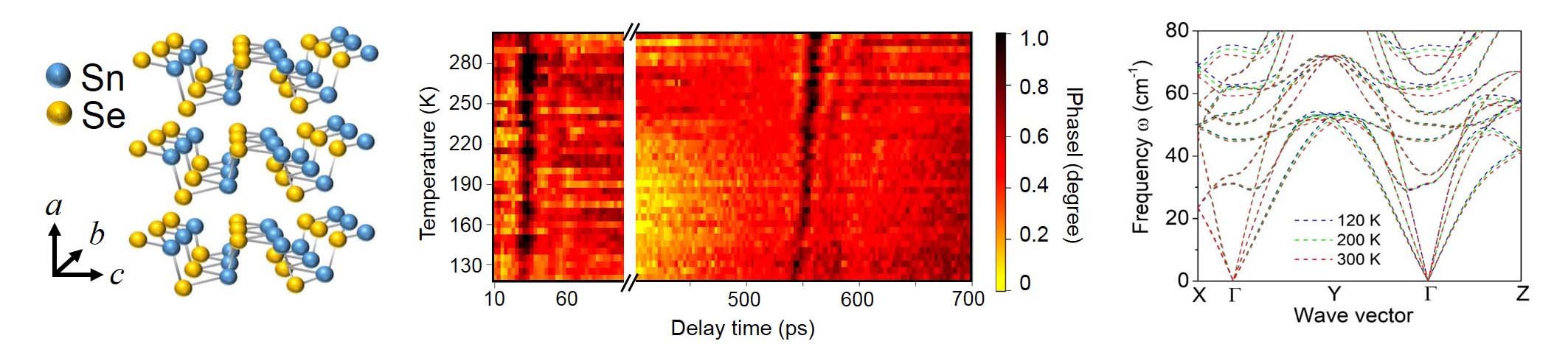
This study reports the experimental measurements and theoretical calculations of phonon transport in the record-high thermoelectric material, SnSe, focusing on its undoped and fully dense single crystals. To investigate the phonon anharmonicity, we developed an experimental approach combining picosecond ultrasonics and X-ray diffraction to enable direct measurement of temperature-dependent sound velocity, thermal expansion coefficient, and Grüneisen parameter. The measured Grüneisen parameter suggests an abnormally large temperature effect on phonon dispersion that contributes to over 90% of phonon frequency shifts. Furthermore, we performed ab initio calculations using different methods: in comparison with self-consistent phonon theory, the harmonic and quasi-harmonic models that have been widely used in current phonon calculations fail to accurately predict these important thermophysical properties. Our study reveals an extremely strong intrinsic anharmonicity in SnSe that introduces phonon renormalization near room temperature. This study represents an important research benchmark in characterizing high-performance thermal energy materials and provides fundamental insight into advancing modern calculation methods for phonon transport theory. July 4, 2019

Observation of anisotropic thermal boundary resistance for near-junction thermal management: experiment and atomistic modeling of interfacial energy transportObservation of anisotropic thermal boundary resistance for near-junction thermal management: experiment and atomistic modeling of interfacial energy transport

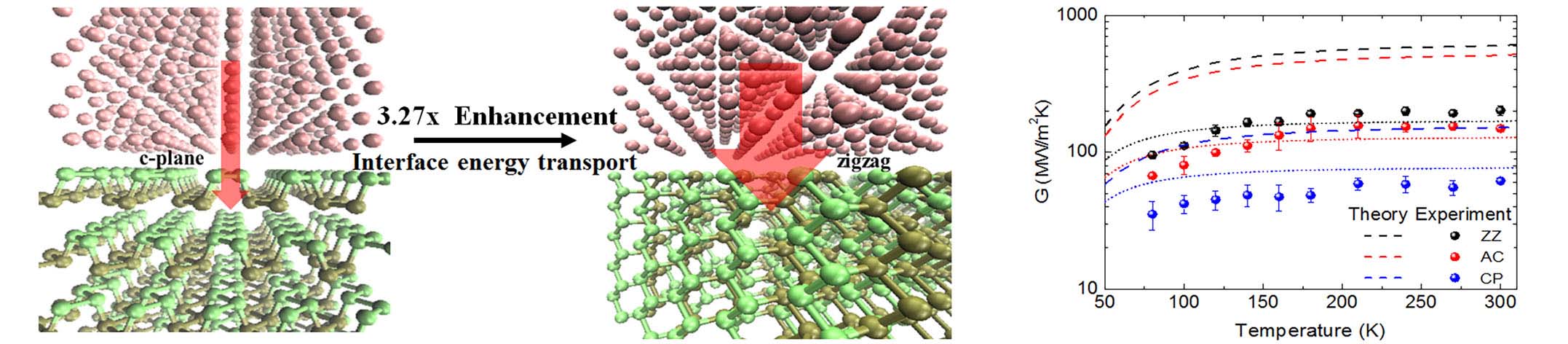
Interfacial thermal boundary resistance (TBR) plays a critical role in near-junction thermal management of modern electronics. In particular, TBR can dominate heat dissipation and has become increasingly important due to the continuous emergence of novel nanomaterials with promising electronic and thermal applications. A highly anisotropic TBR across a prototype 2D material, i.e., black phosphorus, is reported through a crystal orientation-dependent interfacial transport study. The measurements show that the metal-semiconductor TBR of the cross-plane interfaces is 241% and 327% as high as that of the armchair and zigzag direction-oriented interfaces, respectively. Atomistic ab initio calculations are conducted to analyze the anisotropic and temperature-dependent TBR using density functional theory (DFT)-derived full phonon dispersion relation and molecular dynamics simulation. The measurement and modeling work reveals that such a highly anisotropic TBR can be attributed to the intrinsic band structure and phonon spectral transmission. Furthermore, it is shown that phonon hopping between different branches is important to modulate the interfacial transport process but with directional preferences. A critical fundamental understanding of interfacial thermal transport and TBR-structure relationships is provided, which may open up new opportunities in developing advanced thermal management technology through the rational control over nanostructures and interfaces. June 24, 2019

Exploring the theoretically predicted conductivity limit in defect-free crystals: Experimental observation of high thermal conductivity in boron arsenideExploring the theoretically predicted conductivity limit in defect-free crystals: Experimental observation of high thermal conductivity in boron arsenide

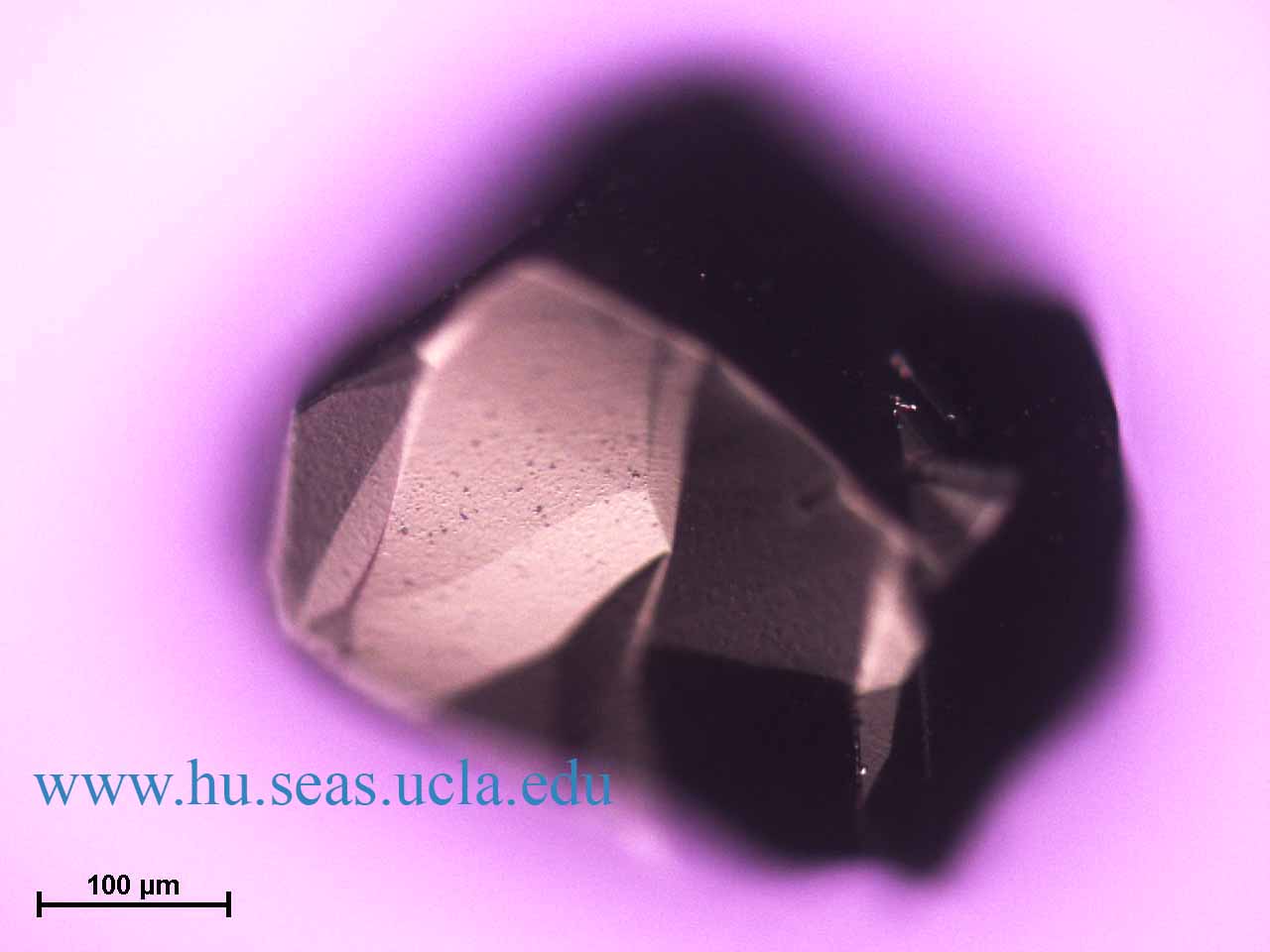
Improving thermal management of small-scale devices requires developing materials with high thermal conductivities. The semiconductor boron arsenide (BAs) is an attractive target because ab initio calculations indicate that single crystals have an ultrahigh thermal conductivity. We synthesized BAs single crystals with undetectable defects and measured a room-temperature thermal conductivity of 1300 W/(m·K). Our spectroscopy study in conjunction with atomistic theory reveals that the unique band structure of BAs allows for very long phonon mean free paths and strong high-order anharmonicity through the four-phonon process. Single-crystal BAs exhibits exceptionally high thermal conductivity compared with conventional metals and semiconductors. Our study establishes BAs as a benchmark material for thermal management applications and exemplifies the power of combining experiments and ab initio theory in new materials discovery. July 5, 2018

Read the research overview →

Thermal management application using emerging high thermal conductivity materials: Thermal and phonon spectral characterization of synthetic boron phosphideThermal management application using emerging high thermal conductivity materials: Thermal and phonon spectral characterization of synthetic boron phosphide

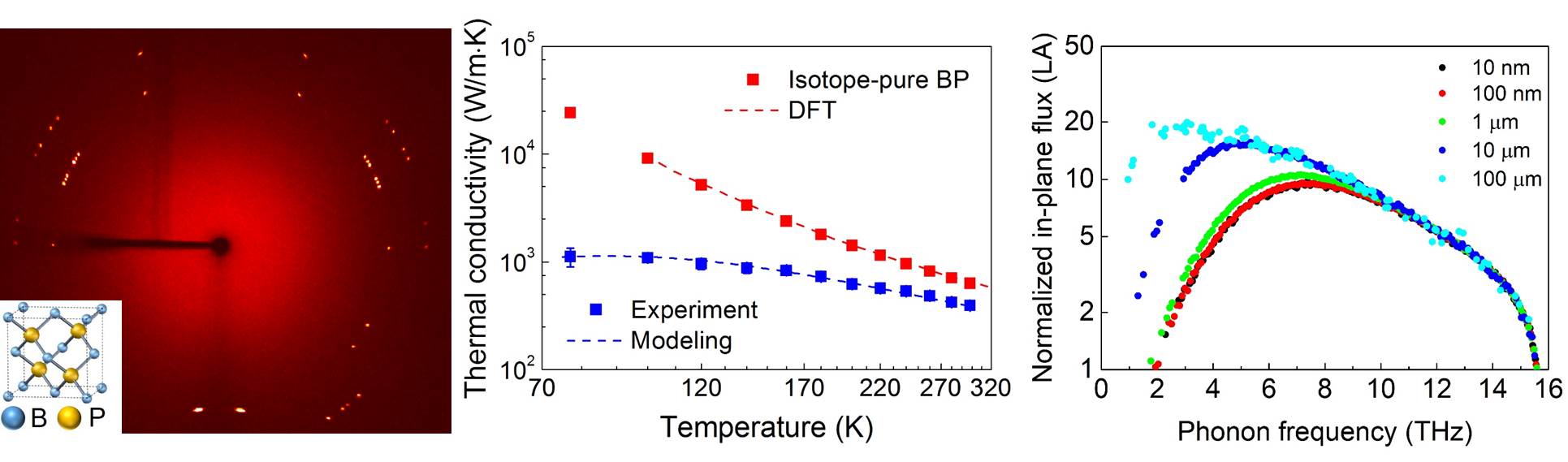
We demonstrated a systematic synthesis-experimental-modeling approach to investigate a high-thermal-conductivity material for efficient heat dissipation: we have chemically synthesized high-quality boron phosphide single crystals and measured a record-high thermal conductivity of 460 W/(m·K) at room temperature. We have, for the first time, experimentally measured the phonon mean free path spectra of boron phosphide and analyzed experimental results by solving the three-dimensional, spectrally resolved phonon Boltzmann transport equation using the variance-reduced Monte Carlo method. The experimental results are in good agreement with predictions by multiscale simulations and density functional theory, which together quantify the heat conduction through the phonon-mode-dependent scattering process. Our finding underscores the promise of boron phosphide as a high thermal conductivity material for thermal management and provides a microscopic-level understanding of the phonon spectra and thermal transport mechanisms of boron phosphide, to enable the rational design of high thermal conductivity materials and nano- to multiscale devices. November 8, 2017

High-performance flexible thermoelectric devicesHigh-performance flexible thermoelectric devices

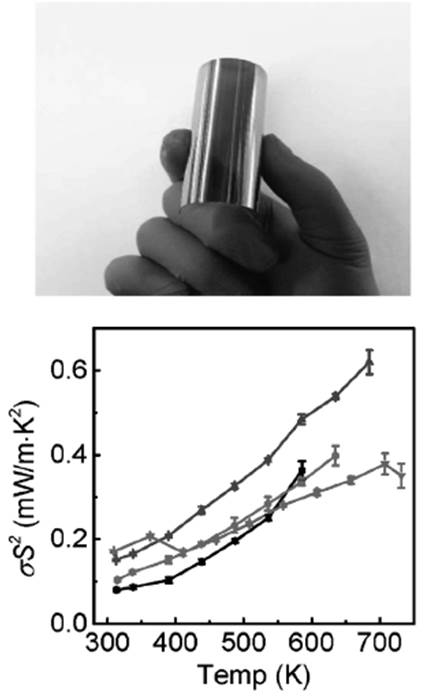
A solid-state thermoelectric device is attractive for applications such as cooling, power generation, and waste heat recovery with unique advantages of quiet operation, zero hazardous emissions, and long lifetime. With the rapid growth of flexible electronics and miniature sensors, low-cost flexible thermoelectric energy harvesters are highly desirable as potential power supplies. Here, we demonstrated a flexible thermoelectric copper selenide (Cu2Se) thin film through a low-cost and scalable spin-coating process for waste heat harvesting applications. March 29, 2017

First in situ thermal-electrochemical characterization of 2D van der Waals materials in a lithium-ion batteryFirst in situ thermal-electrochemical characterization of 2D van der Waals materials in a lithium-ion battery

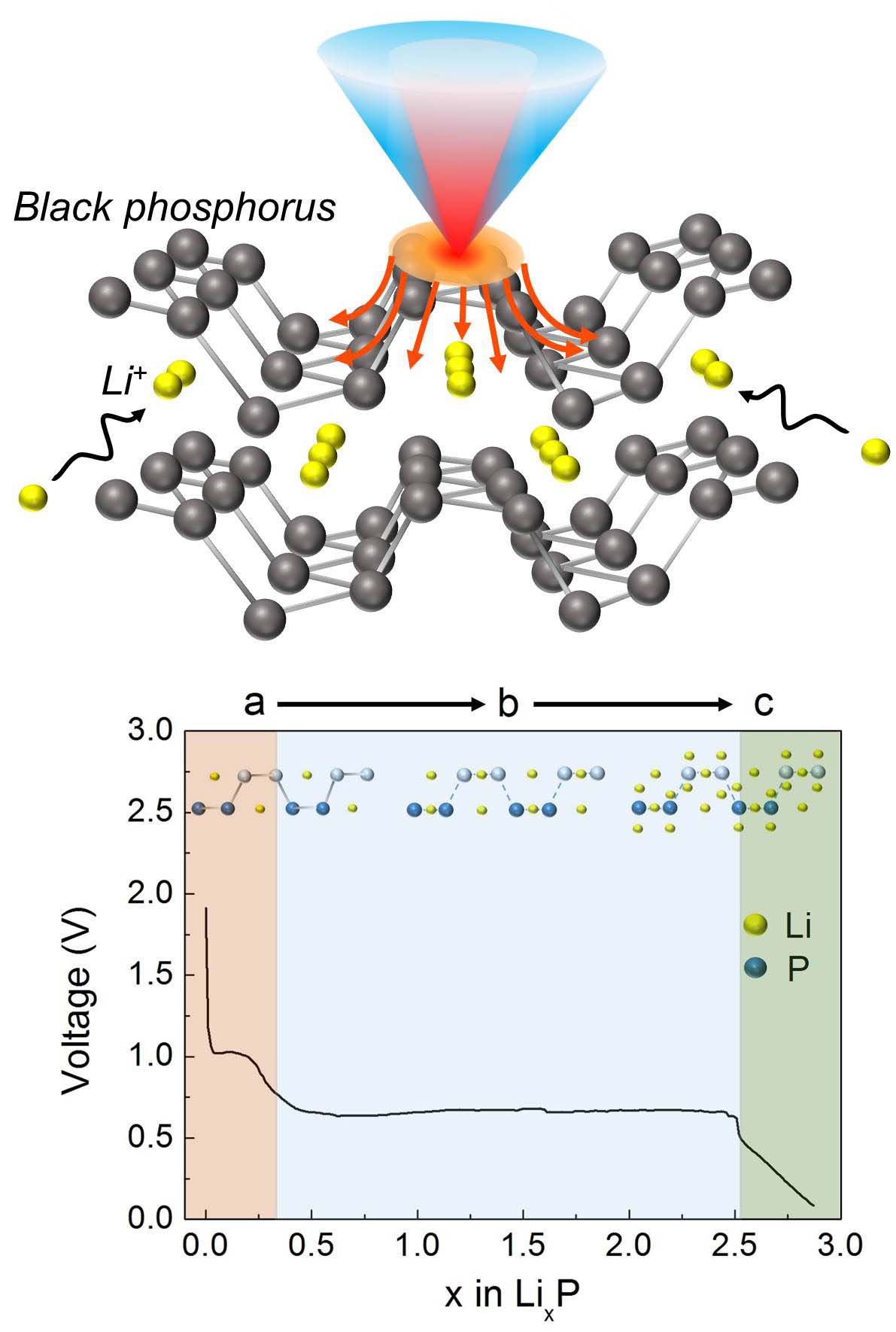
This work presents the first demonstration of in situ thermal-electrochemical characterization of a 2D van der Waals material in a lithium-ion battery. A novel approach to integrate ultrafast optical spectroscopy and electrochemical control has been developed to investigate the thermal transport in the 2D material electrode (black phosphorus) during the battery's normal operation process. The study reveals intriguing anisotropic ion-phonon interactions and highly reversible electrochemical control over the thermal properties. February 23, 2017

Paper published in  Nature NanotechnologyPaper published in Nature Nanotechnology

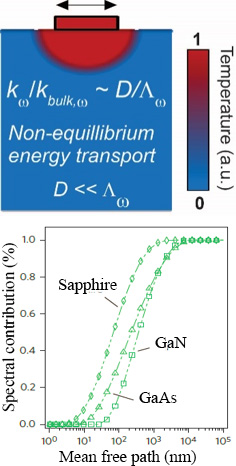
This work presents a tabletop pump-probe spectroscopy approach to measure the phonon spectral contribution to heat transfer. Classical diffusion theory fails to describe small-scale energy transport, including the temperature rise in modern electronics and thermal solar energy harvesting devices, but the new work provides detailed quantification of such non-equilibrium energy transport down to its spectral contributions. Experimental measurement is compared with modeling results based on the transient, frequency-dependent Boltzmann transport equation and multi-scale Monte Carlo methods, which enable us to better understand heat transfer and design energy materials. June 10, 2015

Experimental study of the proposed super-thermal-conductor: BAs in Applied Physics LettersExperimental study of the proposed super-thermal-conductor: BAs in Applied Physics Letters

This work reports the first thermal measurement of boron arsenide, the new candidate material of ultrahigh thermal conductivity for thermal management based on first-principles prediction. Despite a high density of vacancy impurities, our measurements show relatively high thermal conductivity, providing an important first step toward developing highly thermally conductive materials. February 20, 2015